
Have you ever turned on your heater or air conditioner and smelled something musty, kind of like wet socks? That strange smell might be more than just old air; it could be Mold in Air Ducts. Sometimes, this mold is black mold, and it can be dangerous for your health and your home.
When mold grows in your air ducts, it can spread mold spores into the air you breathe every day. These spores are so tiny that you can’t see them, but they can still cause problems. However, if you want the best Mold Air Duct Cleaning in Smyrna and nearby areas, Book an Appointment with MMI Home Improvement Pro.
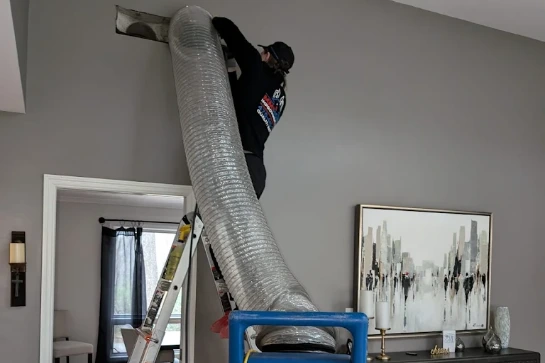
What Is Mold?
Mold is a type of tiny fungus that grows in damp and dark places, like basements, bathrooms, and, yes, even air ducts. Mold can be green, white, orange, brown, or black. It grows on walls, ceilings, and vents, especially if there’s moisture around.
Let’s explore what black mold is, how it gets into air ducts, why it’s harmful, and what you can do to stop it.
What Is Black Mold?
Black mold, also known as Stachybotrys chartarum, is a kind of mold that looks dark green or black. It’s known to be one of the more dangerous types of mold because it can make people very sick.
Black mold makes tiny spores that float in the air. If someone breathes in these spores, especially over a long time, they can have allergic reactions, trouble breathing, and other health problems.
How Does Mold Get Into Air Ducts?
Air ducts are long tubes that carry warm or cool air throughout your house. These ducts are usually hidden behind walls or ceilings. If the ducts get wet or dirty, they become the perfect home for mold.
Here are a few ways mold might grow in air ducts:
- Leaks or condensation: If there’s water leaking into the ducts or if water condenses inside, mold can grow.
- High humidity: In places with much moisture in the air, ducts can stay damp.
- Dust and dirt: Mold feeds on dust. If the air ducts are dusty, that gives mold something to eat.
Once mold grows, it can quickly spread throughout your HVAC (heating, ventilation, and air conditioning) system.
Why Mold in Air Ducts Is Dangerous
Mold in air ducts isn’t just gross, it can be harmful to your health. Since air from the ducts travels to every room, mold spores can spread all over the house. That means everyone in the house is breathing in those tiny particles.
Here’s how mold in air ducts can affect your health:
1. Breathing Problems
People with asthma, allergies, or other breathing issues might find it harder to breathe when mold is in the air. It can even cause asthma attacks.
2. Sneezing and Coughing
Mold spores can irritate your nose and throat, making you sneeze and cough more.
3. Eye and Skin Irritation
Some people get itchy eyes, rashes, or dry skin from being near mold.
4. Headaches and Tiredness
Being around mold for a long time can make people feel dizzy, tired, or have headaches.
5. Weaker Immune Systems
Young kids, older adults, and people with health problems are more likely to get sick from mold.
Read Also: How Does HVAC Mold Cleaning Affect Airflow Balance in Your Home?
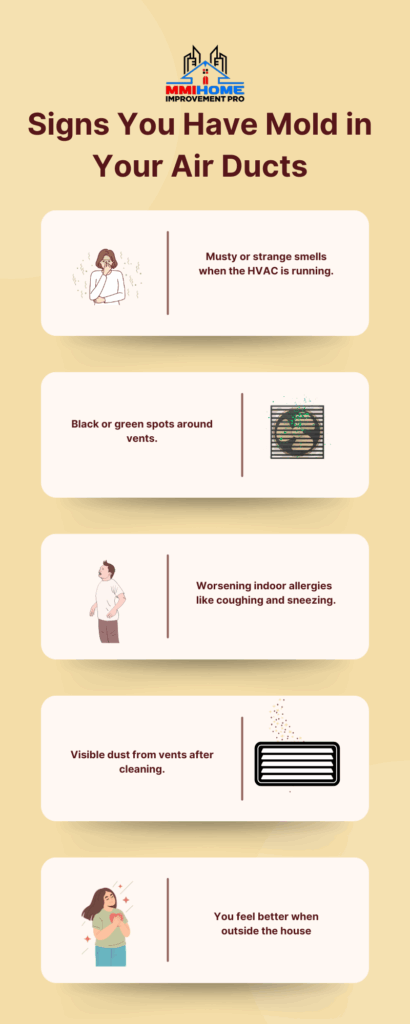
Signs That You Have Mold in Your Air Ducts
How do you know if there’s mold hiding in your air ducts? Here are some signs to watch for:
- Strange or musty smells when the air system is on
- Black or green spots around air vents
- Allergies getting worse indoors
- Dust coming from vents even after cleaning
- Feeling better when you’re outside the house
If you notice these signs, it might be time to have your air ducts checked for mold.
What to Do If You Find Mold in Air Ducts
If you think you have mold in your ducts, it’s important to act fast. The longer it stays there, the more it spreads and the more it affects your health.
Should You Clean It Yourself?
You might be tempted to clean the vents yourself, but that’s not always a good idea. Scrubbing mold without the right tools can spread spores into the air and make the problem worse. Plus, you might miss the mold that’s deep inside the ducts.
Call a Professional
A professional air duct cleaning service can:
- Inspect the system safely
- Use special equipment to clean the ducts
- Remove all mold, even the hidden parts
- Make sure the mold doesn’t come back
It’s the safest and most effective way to handle mold in air ducts.
How to Prevent Mold in Air Ducts
Keeping mold out of your air ducts is easier than you think. Just follow these simple steps:
Keep It Dry
Mold needs moisture to grow. Use a dehumidifier if your home feels damp. Fix any leaks quickly.
Change Air Filters Regularly
Dirty air filters collect dust and moisture. Change them every 1–3 months to keep the air clean.
Use the below code to embed this infographic
Clean Vents and Ducts
Dust and dirt feed mold. Clean your vents and have your air ducts checked every year.
Improve Air Flow
Good air flow helps keep things dry. Make sure vents aren’t blocked by furniture or curtains.
Use Exhaust Fans
Turn on fans in the kitchen and bathroom to remove steam and extra moisture.
Read Also: Condensation Mold: Best Ways to Prevent It in Long-Term Trailer Storage
Can Mold Come Back?
Yes, it can, but only if the conditions are right. If moisture gets back into the ducts or you don’t keep them clean, mold might return. That’s why prevention is so important.
Regular maintenance and yearly HVAC checkups can help keep mold away for good.
Summary
Mold in air ducts may be hidden, but it can still hurt your health. If you notice strange smells, spots near vents, or more allergies in your home, it might be time to check your ducts. Don’t wait, mold spreads fast, and it’s better to catch it early. Getting help from a professional and keeping your ducts clean will make your air safer to breathe and your home healthier. Breathe easy, stay safe, and remember, clean air is happy air!