
Attic mold is a common problem in many homes. It can damage your house, weaken its structure, and affect your indoor air quality. Mold in your attic grows quietly and spreads fast. By the time you notice it, the damage may already be serious.
Here, we will explain what causes attic mold, how to spot it early, and the steps to remove it safely. We will also share simple tips to prevent attic mold in the future.
If the problem is widespread, Mold Removal and Remediation Services can help restore your attic professionally.
What Is Attic Mold?
Attic mold is a type of fungus that grows in the dark, damp spaces of your attic. Mold spores are tiny and float in the air. When they land on a moist surface, they grow into mold colonies. These colonies can look black, green, brown, or white, depending on the type.
Common types found in attics include black mold (Stachybotrys), Cladosporium, and Aspergillus. While not all molds are toxic, they can still trigger allergies and breathing problems.
What Causes Attic Mold?
Several conditions can lead to mold growth in your attic. These include moisture, poor airflow, and lack of insulation. Let’s look at each one in detail.
1. Roof Leaks
One of the most common causes of attic mold is a leaking roof. Water enters through damaged shingles or flashing and creates a moist environment where mold thrives. Even small leaks can cause big problems over time.
2. Poor Ventilation
Your attic needs proper airflow to stay dry. If air gets trapped, moisture builds up. Warm air from inside your home rises and carries humidity with it. Without proper vents, this humid air gets stuck, leading to mold growth.
3. Bathroom or Kitchen Exhaust Vents
Some homes have bathroom or kitchen fans that vent into the attic instead of outside. This is a major mistake. Steam and moisture from these areas collect in the attic and create perfect conditions for mold.
4. Insufficient or Wet Insulation
Old or poorly installed insulation can also be a problem. If insulation gets wet from leaks or condensation, it becomes a breeding ground for attic mold. Wet insulation takes a long time to dry and traps moisture against the wood structure.
5. Ice Dams in Winter
Ice dams form when heat from the house melts snow on the roof, which refreezes at the edge. Water builds up behind the dam and can leak into the attic. This water causes mold to grow along rafters and sheathing.
Read Also: Is Black Mold in Air Ducts Dangerous?
Signs of Attic Mold
Knowing how to spot mold early can save you money and stress. Here are some common signs of attic mold:
- Dark spots or patches on wood or insulation
- Musty or earthy smell in the attic
- Moisture stains or discoloration
- Peeling paint on ceilings (from above)
- Increased allergy symptoms in the home
If you notice any of these signs, act fast. The longer the mold stays, the more damage it causes.
How to Remove Attic Mold
Mold removal depends on how much of your attic is affected. You can remove small areas yourself, but large infestations need professional help. Here are the basic steps.
1. Protect Yourself
Wear protective gear, including gloves, goggles, and a mask. Mold spores can irritate your lungs and skin.
2. Identify and Fix the Source
Find out where the moisture is coming from. Repair roof leaks, seal vents, or upgrade insulation. If you do not stop the source, mold will return.
3. Isolate the Area
Close off the attic from the rest of the house. Use plastic sheeting to block doorways and vents. This prevents mold spores from spreading.
4. Remove Contaminated Materials
Take out any moldy insulation, wood, or drywall that cannot be cleaned. Use sealed plastic bags to carry out the debris.
5. Clean Moldy Surfaces
Use a non-toxic mold remover or a mixture of white vinegar and water. Scrub affected surfaces with a stiff brush. Let them dry fully before applying any treatments.
6. Use a Mold Encapsulant (Optional)
For added protection, you can apply a mold-resistant sealant to cleaned surfaces. This keeps mold from coming back.
7. Check Moisture Levels
Use a moisture meter to ensure the attic is dry. Mold won’t grow if the wood is dry and the air is clean.
How to Prevent Attic Mold
Prevention is the best way to deal with attic mold. Use these tips to keep your attic clean and dry.
1. Inspect Your Roof Twice a Year
Look for damaged or missing shingles and repair them right away. Check flashing and seals around chimneys and vents.
2. Improve Attic Ventilation
Install ridge and soffit vents if needed. Use attic fans to move warm air out in summer.
3. Direct Exhaust Fans Outside
Make sure all exhaust fans from the kitchen and bathroom go outside, not into the attic.
4. Use Mold-Resistant Materials
Choose mold resistant insulation and drywall when building or renovating. These materials do not absorb moisture easily.
5. Monitor Humidity Levels
Keep your attic’s humidity below 60 percent. Use a hygrometer to track levels and a dehumidifier if needed.
When to Call a Professional For Mold Removal Service
Sometimes, it is better to let a mold removal company handle the job. Call professionals if:
- Mold covers more than 10 square feet
- The attic smells strongly of mold
- You see signs of mold returning after removal
- You or a family member has health issues like asthma
Professionals use tools like HEPA vacuums and fogging machines to remove mold safely. They also find hidden moisture sources you might miss.
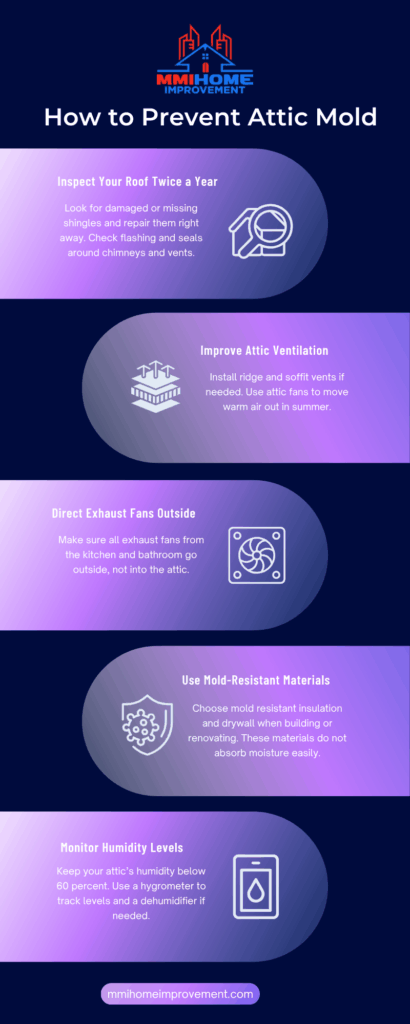
Use the below code to embed this infographic
Summary
Attic mold can silently damage your home and health. By understanding what causes it and how to remove it, you protect your house from costly repairs. Regular roof checks, good airflow, and moisture control are key to prevention.
If you already see signs of attic mold, take action today. Whether you clean it yourself or hire a pro, removing mold early saves time, money, and stress.