
Mold Infestation in HVAC air ducts is a problem many homeowners face. Mold is a type of fungus that grows in damp and dark areas. When it spreads inside ducts, it can lower air quality and harm health. Understanding what causes mold is the first step to stopping it.
Dirt and dust inside ducts give mold food to grow. When air does not move, moisture stays trapped, and mold spreads faster. If this happens, contact a trusted MMI Home Improvement Pro for Mold Air Duct Cleaning in Duluth, they can clean ducts, remove mold, and keep your air safe to breathe.
9 Causes of Mold Infestation in the HVAC
Moisture in the Ducts
Moisture is the most common cause of Mold Infestation in HVAC ducts. Mold needs water to grow. When condensation forms inside ducts, it creates the perfect setting.
Condensation often happens when warm air meets cold duct surfaces. If ducts are not insulated, this problem gets worse. Leaks from roofs or plumbing can also add moisture. Once water enters the ducts, mold can grow quickly.
High Humidity Levels
Homes with high humidity are more likely to face Mold Infestation. Humidity means the amount of water vapor in the air. When levels are above 60 percent, mold thrives.
Basements, bathrooms, and kitchens often increase humidity. If the HVAC system pulls this air into the ducts, moisture builds up. Without proper dehumidifiers or ventilation, mold finds a steady food source.
Poor Ventilation
Poor ventilation also leads to mold problems. Ventilation is how air moves in and out of spaces. If airflow is weak, ducts trap stale and damp air. This creates a closed space where mold grows.
Dirty filters, blocked vents, or poorly designed systems cause poor airflow. When air does not move freely, it cannot dry out moisture inside the ducts. Over time, this stagnant environment invites mold growth.
Dust and Organic Debris
Mold needs food to survive. Dust, dirt, and organic debris inside ducts provide that food. Skin flakes, pollen, and pet dander settle in the duct system. When moisture mixes with these particles, mold begins to feed.
If ducts are not cleaned, layers of debris build up. These layers turn into a perfect home for mold. Regular cleaning helps remove these food sources and lowers the risk of infestation.
Leaks and Water Damage
Water leaks from roofs, pipes, or nearby walls can drip into ducts. Even small leaks provide enough moisture for mold to grow. If the leak is hidden, it may go unnoticed for months.
Water damage near ducts should always be repaired quickly. Otherwise, mold can spread from the wet area into the HVAC system. Preventing leaks is one of the most effective ways to avoid infestation.
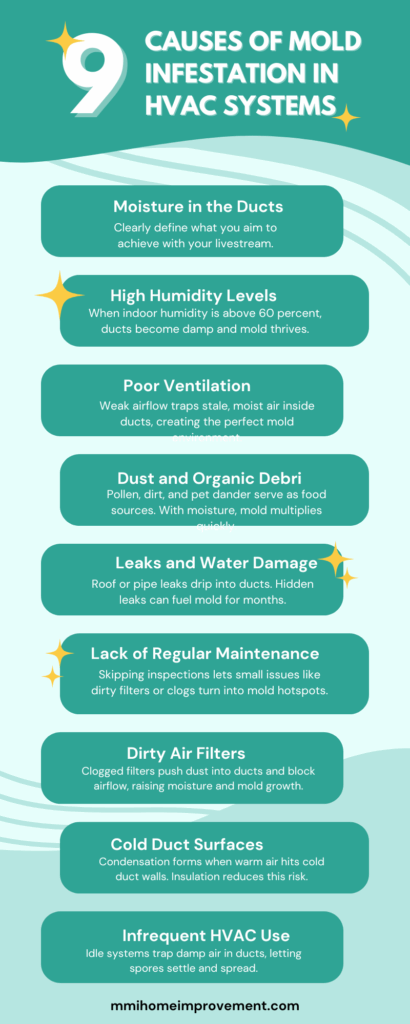
Use the below code to embed this infographic
Lack of Regular Maintenance
Skipping regular HVAC maintenance also increases mold risks. Without inspections, small issues such as dirty filters, clogged drains, or leaks get worse. Over time, these problems create a breeding ground for mold.
Professional maintenance checks help spot early warning signs. Cleaning coils, changing filters, and inspecting ducts reduce the chance of infestation. Simple upkeep can prevent larger problems later.
Dirty Air Filters
Air filters trap dust, pollen, and dirt before air enters the ducts. If filters are clogged or not replaced, they stop working well. This allows debris to move into the ducts.
Dirty filters also block airflow, which makes ducts more humid. Both conditions help mold grow. Replacing filters every one to three months is a simple step to stop Mold Infestation.
Cold Duct Surfaces
Mold grows when warm, humid air meets cold surfaces. Ducts often run through attics, basements, or crawl spaces where temperatures are cooler. When air inside the ducts is warm, condensation forms on the metal.
This moisture builds up over time and gives mold the perfect spot to grow. Insulating ducts can reduce condensation and stop this cycle.
Using the HVAC System Less Often
Mold Infestation can also happen when the HVAC system is not used regularly. When air is not moving, ducts stay damp and humid. This still air allows spores to settle and grow.
Running the system often helps keep the air dry and moving. Even short cycles can lower moisture and stop mold from spreading.
Read Also: Does Hard Floor Drying Prevent Mold Growth?
Signs of Mold Infestation in Ducts
It is important to know when mold may already be in the system. Common signs include musty odors when the system runs. Some people may notice more allergies or breathing problems indoors.
HVAC systems move air throughout a home. If mold develops inside the ducts, spores spread into every room. These spores can trigger allergies, breathing issues, and musty odors. To protect your home and health, it is important to learn the main causes of mold infestation.
Preventing Mold Infestation
The best way to deal with Mold Infestation is to prevent it. Keep humidity below 50 percent with dehumidifiers. Repair leaks quickly and insulate ducts to stop condensation. Replace air filters often and schedule professional maintenance each year.
Cleaning ducts removes dust and debris that mold feeds on. Ventilation improvements also help keep air moving and dry. By combining these steps, you can reduce the chance of mold spreading in your home.
Read Also: How to Get Rid of Black Mold?
Summary
Mold Infestation in HVAC air ducts can harm both health and home comfort. It is caused by moisture, humidity, poor airflow, and debris. Small problems like leaks or dirty filters can grow into big issues if ignored. By understanding the causes, homeowners can take steps to prevent mold. Regular cleaning, repairs, and inspections keep ducts safe and healthy. Preventing Mold Infestation is easier than fixing it once it spreads. A little care goes a long way in keeping the air fresh and clean.