

When your home feels just right, it is usually thanks to a good HVAC system. These systems do more than heat or cool your rooms, they also keep the air fresh and healthy. But with so many types of HVAC systems, choosing the right one can feel confusing. Each type has its own strengths, and understanding them helps you make smarter choices. Still, even the best system needs care to work well. Dust and dirt can lower air quality and make your system less efficient.
That is why many homeowners call for HVAC cleaning services in Roswell, where trusted experts MMI Home Improvement Pro make sure your system runs smoothly all year long.
What Does HVAC Mean?
HVAC stands for Heating, Ventilation, and Air Conditioning. It is the system that helps control temperature and airflow. An HVAC system can:
- Keep you warm in the winter.
- Keep you cool in the summer.
- Improve the air you breathe indoors.
There are two main groups:
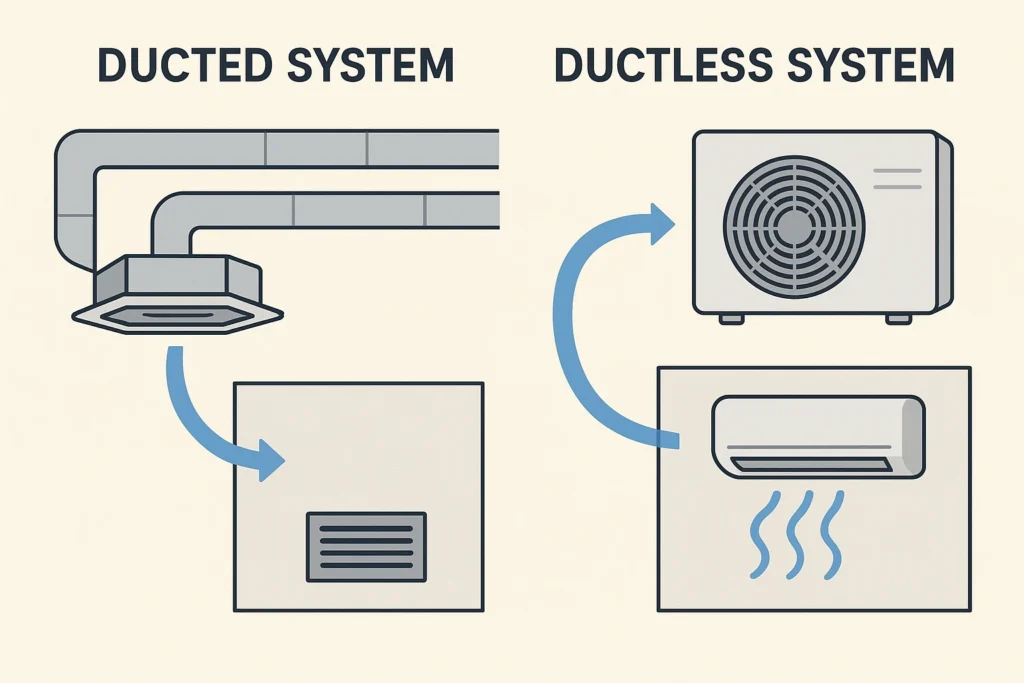
- Ducted systems: They use air ducts and vents to move hot or cold air through the building.
- Ductless systems: They do not use ducts. They heat or cool the room where they are installed.
Types of Ducted HVAC Systems
Ducted systems are common in houses, schools, and offices. If you see vents on the floor, wall, or ceiling, it is likely a ducted system.
1. Split System
This is the most common type. It has two parts:
- An indoor unit that makes heat.
- An outdoor unit that makes cool air.
A thermostat sets the temperature for the whole house.
Key benefit: One system handles both heating and cooling.
2. Hybrid Split System
This system looks like a normal split system, but it can use two types of energy:
- Gas for fast, strong heating.
- Electricity for lower energy use.
This lets you save money in mild weather while still staying warm in the cold.
Key benefit: Uses less energy and helps lower bills.
3. Packaged Heating and Cooling
In this system, heating and cooling come from one single unit. The unit is often placed outside on a roof or near the foundation.
- It is smaller, so it works well for small houses or offices.
- It is also easier and cheaper to take care of.
Key benefit: Saves space and is simple to maintain.
4. Zoned HVAC System
Zoned systems give you more control. You can set different temperatures for different rooms.
- Great for big houses or buildings with many floors.
- Dampers in the ducts can push air to one room and reduce it in another.
Key benefit: Each room can have its own comfort level.
Types of Ductless HVAC Systems
Not all places can use ducts. Apartments, small houses, or old buildings may not have space for them. In that case, ductless systems are a good choice.
5. Duct-Free Mini-Split
A mini-split has two parts:
- An outdoor compressor.
- An indoor unit for each room.
Each unit has its own thermostat. You can set one room cool and another room warm.
Key benefit: Each room has its own control and saves energy.
6. Hydronic Heating
This system does not use air. Instead, it uses water to make heat.
- A boiler warms the water.
- The water flows through pipes in the floor or to radiators.
- The heat spreads evenly in the room.
Key benefit: Gives steady and comfortable warmth.
7. Portable Spot Cooler
This is a movable air conditioner. You can roll it into a room, plug it in, and cool the space.
- Great for large rooms, job sites, or outdoor areas.
- It pulls in air, cools it, and blows it back out.
- A tube pushes warm air outside.
Key benefit: Easy to move and set up anywhere with power.
8. Portable Heat Pump
This looks like a spot cooler but can also provide heat.
- In summer, it cools.
- In winter, it warms the room.
- It is easy to move from one space to another.
Key benefit: Works in all seasons with heating and cooling.
How to Select the Right HVAC System
When you look at the types of HVAC systems, think about these points:
- Size of your home: A big home may need a zoned or split system. A small apartment may only need a ductless system.
- Climate: Cold areas often need gas heating. Mild areas can use electric or hybrid systems.
- Energy use: If you want to save money, choose hybrid systems or ductless mini-splits.
- Budget: Packaged units cost less to install. Zoned systems cost more but save energy over time.
Why Hire a Professional Installer?
Even the best HVAC system will not work well if it is not installed right. A trained HVAC technician can:
- Measure your home and check the layout.
- Suggest the best system for your needs.
- Install it safely and correctly.
Good installation means your system will last longer and work better.
Summary
Now you know the main types of HVAC systems.
- Split systems are common and simple.
- Hybrid systems save energy.
- Packaged units are small and easy to care for.
- Zoned systems give personal comfort.
- Mini-splits and hydronic heating are good for ductless options.
- Portable coolers and heat pumps work well for short-term needs.
The right system depends on your space, budget, and climate. If you are not sure which one to pick, talk to an HVAC professional. They can help you choose a system that keeps your space comfortable all year long.