

Your HVAC system moves air around your home every day. The air travels through ducts before reaching your rooms. When moisture gets into the ductwork, mold can start to grow. Over time, this mold may affect your indoor air and spread through your home when the HVAC system runs. If you notice mold growth in your home in Suwanee, professional Mold Removal and Remediation in Suwanee, can help address the problem and find the source of the moisture. For mold found in or around HVAC ducts, Duct Mold Removal can help create a cleaner indoor environment.
What Causes Mold in Air Ducts?
Mold needs moisture to grow. Air ducts can become a place for mold when water or moisture gets trapped inside.
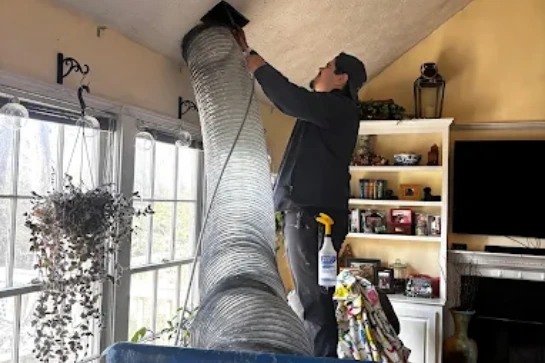
Some common causes include:
- Water leaks
- High indoor humidity
- Condensation
- Wet insulation
- Poor drainage
- HVAC leaks
- Roof or plumbing leaks
- Water damage
Ducts in attics, basements, and crawl spaces may face a higher risk of moisture problems.
Finding the cause of the moisture is important. If you only remove the mold but do not fix the water problem, the mold may come back.
Why Is Duct Mold Removal Important?
Mold can release small particles into the air. When your HVAC system runs, these particles may move through the ducts and enter different rooms. Some people are more sensitive to mold than others. Mold exposure may cause problems such as eye, nose, throat, or skin irritation. For this reason, suspected mold in your duct system should not be ignored. Duct Mold Removal can help remove mold from affected areas when the right cleaning methods are used. A professional can also check the system and look for the source of the moisture.
Read Also: How Does Professional Mold Inspection and Testing Work?
How Does Mold Affect Indoor Air Quality?
Indoor air quality refers to how clean and healthy the air inside your home is. Mold can affect indoor air quality. When mold grows in or near your HVAC system, air movement may spread mold particles around your home. Some people may notice a musty smell when the HVAC system is running. Others may notice visible mold near vents or other areas. If you notice these signs, it is a good idea to have the area checked.
Read Also: Will Mold Cleaning Remove Smell?
What Are the Signs of Mold in Air Ducts?
Mold inside your ducts can be hard to see. However, some signs may point to a possible problem.
Look for:
- A strong musty smell
- Visible mold near vents
- Water around the ductwork
- Wet or damaged insulation
- Frequent moisture problems
- Mold near HVAC parts
Keep in mind that dark spots do not always mean mold. Dust and dirt can look similar.
A professional inspection can help you find out what is causing the problem.
How Does Duct Mold Removal Work?
The process depends on where the mold is and how much mold is present. First, a professional checks the HVAC system and ductwork. They may also check the insulation and nearby areas.
Next, they look for the source of the moisture. This step is important because mold can return if the moisture problem remains. The affected areas can then be cleaned using methods that are suitable for the duct material. If insulation or other materials have serious mold damage, they may need to be replaced.
Why Should You Consider Professional Help?
Cleaning air ducts may look simple, but mold can hide in areas that are hard to reach. A professional can check the system and determine if the dark spots are actually mold. They can also find areas that may need cleaning or repair. Using the wrong cleaning products or tools can damage your ductwork. It can also spread mold particles into the air. Professional help can make the cleaning process safer and more effective. You should consider professional help if you notice visible mold, strong musty smells, water damage, or mold near HVAC parts. Professional help may also be useful when the mold covers a large area or is in a hard-to-reach place. If mold has spread beyond the ductwork, services such as Mold Removal and Remediation in Woodstock can help address the wider mold problem.
Can You Remove Duct Mold Yourself?
Some small areas on hard surfaces may be cleaned at home. However, air ducts can be difficult to reach and clean properly. Mold may also be hidden inside insulation or other parts of the HVAC system. If you find a large amount of mold or cannot reach the affected area, professional help is a better choice. You should also avoid disturbing mold if you are not sure how to handle it safely.
Read Also: What is the best method of mold treatment?
What Happens to Moldy Duct Insulation?
Duct insulation needs special care. Some types of insulation can absorb water. If they become badly affected by mold, cleaning may not be enough. In these cases, the damaged insulation may need to be removed and replaced. This is why simply spraying a cleaning product into the duct may not fix the problem. A professional can check the insulation and suggest the right solution.
How Can You Prevent Mold in Air Ducts?
The best way to prevent mold is to control moisture.
Here are some simple steps you can follow:
Control Indoor Humidity
High humidity can create moisture inside your home. Keep indoor humidity at a comfortable level to help reduce moisture problems.
Fix Water Leaks
Repair roof, plumbing, and HVAC leaks as soon as you notice them.
Change Your Air Filter
Replace your HVAC filter based on the manufacturer’s recommendations. A clean filter can help your system maintain good airflow.
Check Your Ducts
Look for water, condensation, or damaged insulation around your ductwork.
Maintain Your HVAC System
Regular HVAC maintenance can help find leaks, drainage problems, and other issues before they become bigger problems.
Summary
Duct Mold Removal can help deal with mold in your HVAC ductwork and support better indoor air quality. Mold can grow when moisture gets inside or around your ducts. If the moisture problem is not fixed, the mold may return. Regular HVAC care, clean filters, moisture control, and quick repairs can help reduce the risk of mold.